Architect Your Business, Not Your Chaos: The Systems Engineer's Guide to Building Apps That Actually Run Your Operation

The 3 AM Hook
Let me describe your current tech stack.
You've got a project management tool, a CRM, a marketing automation platform, a form builder, a scheduling app, a review management tool, and a reporting dashboard — each one connected to the others by a Zapier chain that one person on your team set up 18 months ago and nobody fully understands anymore. Every week, something breaks. A zap fails silently. A lead falls into a gap between two tools. A workflow fires twice, or doesn't fire at all.
You know it's broken. But fixing it feels like open-heart surgery on a patient who's still walking around.
Here's what I call this: The Architecture Debt Trap. You didn't build a business operating system — you built a Frankenstein's monster of disconnected apps, each one solving one problem and creating three others. And every month you don't address it, the debt compounds. More manual workarounds. More one-off fixes. More "don't touch that Zap or everything breaks."
The solution isn't to add another app. The solution is to architect from the inside out — to build a unified operational app that governs how your business actually runs, inside a single connected environment. That's exactly what SPS One Hub lets you do. And as a systems engineer, I'm going to walk you through exactly how to think about it.
The Engine Explanation
Architectural thinking starts with one question: what is the single source of truth for your business?
Not "what apps do you use?" That's the wrong frame. The right question is: where does the definitive version of your customer data live? Where does your pipeline state live? Where does your team coordination live? If the honest answer is "spread across six different places," you don't have a business system — you have six independent systems pretending to be one.
SPS One Hub's unified engine gives you the infrastructure to build one internally-facing operational app that becomes that single source of truth. Here's how a systems engineer actually approaches this build:
### Step 1 — Map Your Operational Loops
Before you build anything, identify the three to five repeating operational loops that run your business. For most service businesses, these are: (1) lead intake and qualification, (2) proposal and close, (3) onboarding and delivery, (4) review capture and reputation management, and (5) retention and upsell. Every app you build should serve one of these loops — and they should all connect to each other without manual handoffs.
### Step 2 — Build Your Trigger Architecture
Inside SPS One Hub's workflow engine, every operational loop is governed by triggers — events that cause the system to take a defined action. A lead submits a form → trigger fires → AI sends acknowledgment → contact is created → pipeline stage is set → task is assigned to a team member → follow-up sequence begins. No human has to touch any of that. The trigger architecture is the skeleton of your operational app. Build it right and the whole body moves correctly.
### Step 3 — Construct Your Internal Dashboard App
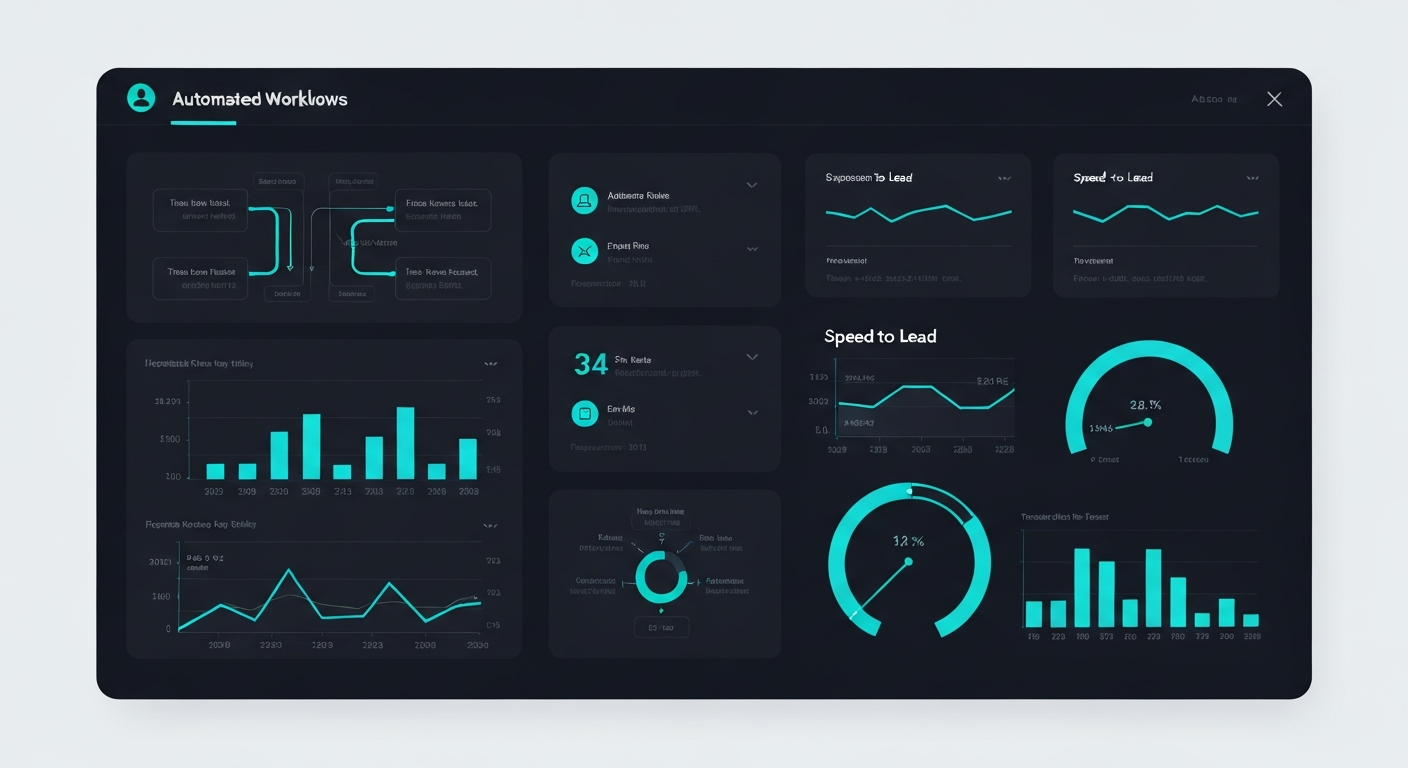
This is where most business owners leave serious efficiency on the table. SPS One Hub lets you build a custom internal-facing app view — a command center that your team logs into every morning and sees: active pipeline by stage, leads requiring action, follow-up sequences that are live, review requests pending, and campaign performance metrics. One screen. No tab-switching. No "where is that?" conversations in Slack.
Think of it this way: most businesses are running their operation like a symphony where every musician has a different sheet of music, is playing in a different room, and has no conductor. Building your operational app inside SPS One Hub is hiring the conductor, putting everyone in the same room, and making sure every instrument is playing the same score — automatically, in sync, on tempo.
### Step 4 — Integrate, Don't Isolate
The apps you build inside SPS One Hub don't exist in isolation. The client-facing intake app Rebecca's cold call team uses feeds directly into the pipeline app your sales team manages. The pipeline app triggers the onboarding workflow. The onboarding workflow, at completion, fires your review request sequence. Every module you build is a node in one connected graph. That's what makes it a system — not just a collection of features.
The Numbers Section
Let me give you the engineering case for consolidation.
When a business operates on a 6-app disconnected stack, internal studies on workflow fragmentation show that:
- 38–42% of all manual errors in business operations are directly caused by data re-entry across systems — meaning nearly half your operational mistakes are created not by bad judgment, but by the act of moving information from one app to another.
- Context-switching between apps costs knowledge workers an average of 23 minutes of deep focus per interruption — meaning every time a team member bounces between tools, it takes nearly half an hour to regain full productive focus. Multiply that by 8 context switches per day, per employee, and you're looking at a complete destruction of deep work capacity.
- Businesses that consolidate their operational apps into a unified system recover an average of 55 full workdays per year — not because they work harder, but because they eliminated the friction tax that disconnected tools impose on every process.
Here's the cost translation: if you're paying $79 for a workflow tool, $89 for a CRM, $49 for a form builder, $59 for a scheduling platform, $39 for a review tool, and $79 for a reporting dashboard — that's $394/month before you account for the integration middleware holding them together. SPS One Hub replaces every single one of those with a unified engine, built to connect — and does it at a fraction of the combined cost.
But the real ROI isn't in the subscription savings. It's in the recovered capacity. When your system runs on one architecture, your team executes faster, your leads convert cleaner, your customers get served better, and your operational errors approach zero — because there's no seam between apps for data to fall through.
The Human Takeaway
I'll be honest with you, because that's how I operate.
Building inside a unified system isn't the easiest thing you'll do this quarter. It requires intentional thinking about how your business actually functions — not how you wish it functioned, or how the software tutorial said it should work, but how your specific team, your specific clients, and your specific services actually flow through your operation every day.
But here's what's on the other side of that work: a business that runs without you holding it together by sheer willpower.
The 55 workdays you recover don't just show up as free time — they show up as growth capacity. That's 55 days of sales calls you could have made. Content you could have created. Relationships you could have built. Hires you could have onboarded. Those are the days that scale a business from surviving to thriving.
When your architecture is right, you stop being the glue that holds your tools together. You become the strategist who deploys them. And that is an entirely different — and infinitely more powerful — role to play in your own company.
Build the system. Run the business. Reclaim the days.
If you're ready to stop duct-taping your stack and start architecting a business that runs on a unified operational system, let's talk shop. Book a Systems Architecture Session with SPS One Hub — we'll audit your current tool stack, identify every gap and redundancy, and deliver a consolidated build plan tailored to your exact operation.