How to Run Multiple Business Locations Without Logging In and Out 50 Times a Day
I've talked to dozens of business owners running two, three, or five locations. And almost every single one of them describes their management process the same way: "It's chaos." Not because they're bad operators — most of them are exceptional at what they do. But because their technology was built for one location, and they duct-taped it into covering multiple locations by adding more logins, more spreadsheets, and more manual reconciliation.
The result? They spend more time managing their tools than managing their businesses. And the moment they're not watching one location closely, something slips — a lead drops, a review goes unanswered, a follow-up doesn't fire. The business doesn't fail because of bad service. It fails because the system can't scale the way the business can.
The Engine Built for the Multi-Location Operator
Think of it this way: running multiple locations on disconnected tools is like being an air traffic controller with a different radio frequency for every runway — and none of the radios talk to each other. You're switching channels constantly, hoping you didn't miss a transmission, managing each runway in isolation while the whole airport depends on your undivided attention.
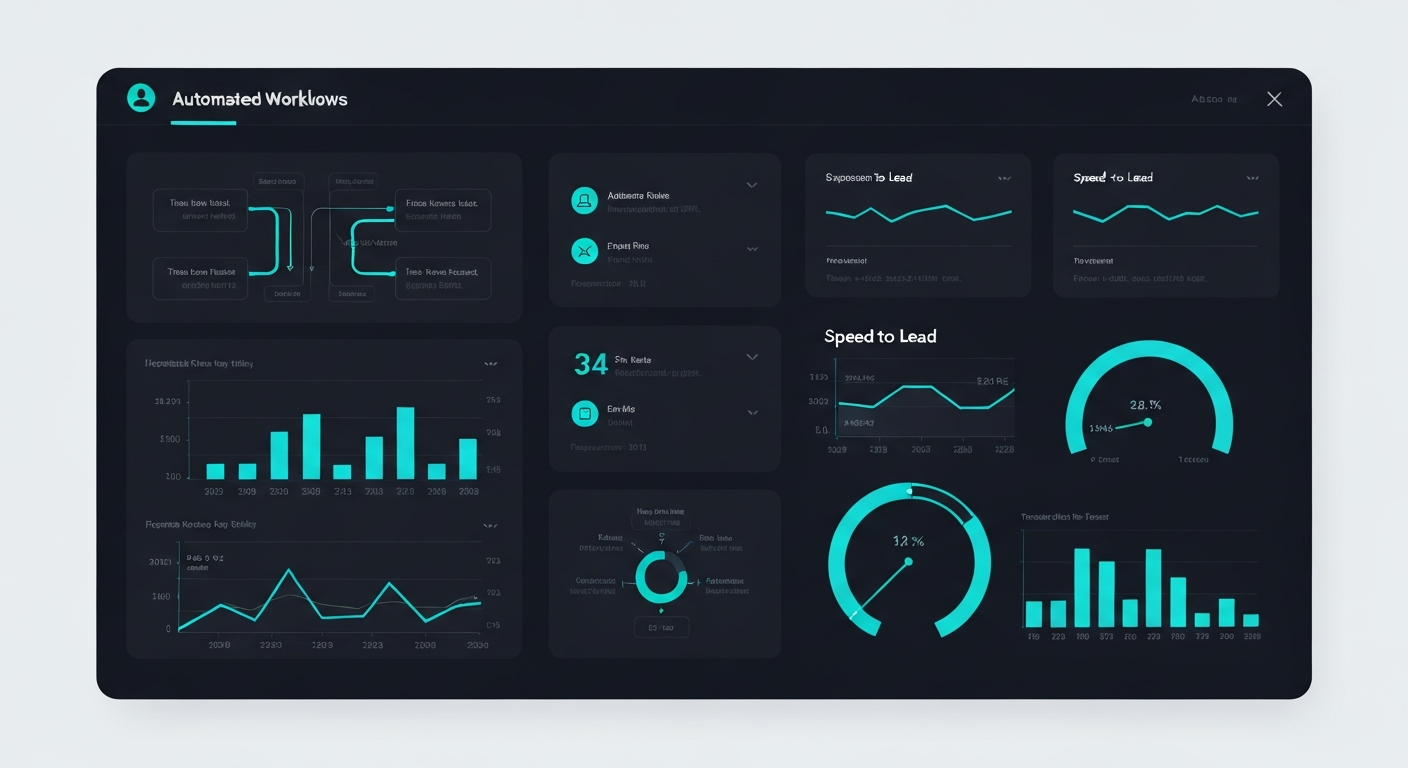
SPS One Hub's connected engine changes the architecture entirely. Every location operates as its own contained system — with its own pipeline, its own contacts, its own AI configuration, and its own communication channel — but all of it is visible and manageable from one master dashboard. You see all locations at a glance. You drill into one location with a single click. You manage team permissions so your location managers see what they need and nothing more.
No switching logins. No juggling five CRMs. No reconciling five separate lead lists at the end of the week. One engine, one login, complete operational visibility across every location you run.
The AI engine scales identically across locations, too. Each location's AI responds to leads in under 60 seconds — using that location's specific service offerings, pricing, and booking calendar. A prospect who contacts your north-side location gets the right local response. A prospect who contacts your downtown location gets theirs. All of it automated. All of it contained. All of it visible to you in real time.
The Numbers Behind Multi-Location Efficiency
Here's the operational reality most multi-location owners don't calculate: every additional disconnected tool you add for a new location multiplies your administrative overhead. Add a second location and your manual sync time doesn't double — it quadruples, because now you're managing the connections between double the tools, double the logins, and double the data sources.
Business owners running disconnected stacks lose an average of 10 hours per week in administrative friction — per location. Two locations running disconnected tools means 20 hours of lost weekly productivity. That's 110 workdays per year evaporating into administrative friction instead of business growth.
Consolidating two locations into SPS One Hub recovers that time across the board — because the friction doesn't multiply when your tools share a single core engine.
What Operational Clarity Actually Gives You
You stop feeling like you're playing whack-a-mole across your locations. You stop the end-of-week scramble to reconcile lead data from three different systems. You stop the sinking feeling that something important is happening at one of your locations while you're paying attention to another.
Instead, you operate with what I call command-center clarity — the ability to see the whole picture, act on any piece of it instantly, and trust that the AI and automation layer is holding the fort at every location simultaneously, without your constant supervision.
That's the difference between owning multiple businesses and being owned by them.
One login. Every location. Total control. That's how you scale without losing your mind.
Running more than one location on disconnected tools is a ticking clock. Book your free Systems Audit at spsonehub.com and let's map a unified architecture that scales with you, not against you.